Platform Overview
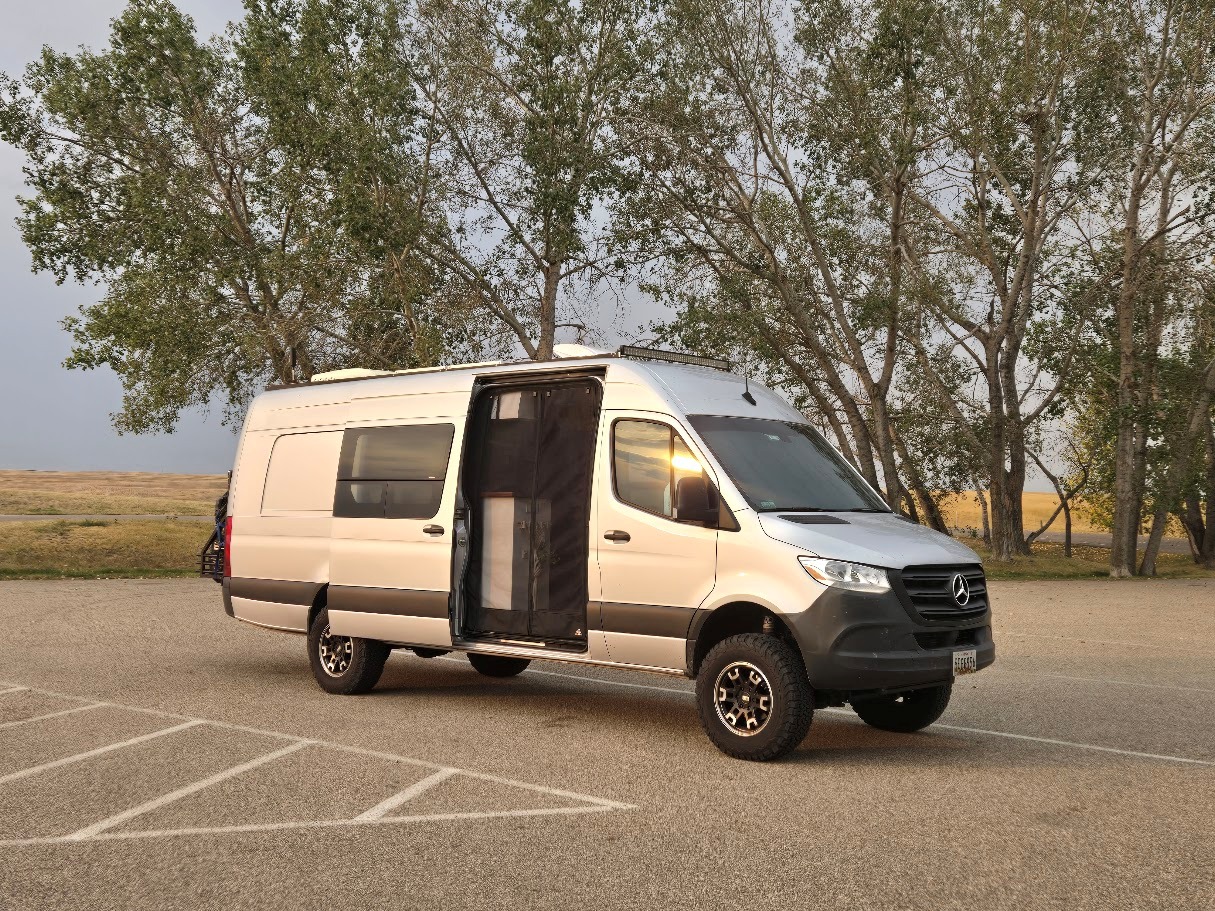
This van is built on the earlier Sprinter platform with a 6-cylinder diesel and true 4x4 with low range. New Sprinters are now 4-cylinder AWD, which is a meaningful difference for buyers who specifically want low range and the previous drivetrain.
This is a purpose-built expedition camper for extended off-grid travel, designed to stay comfortable and self-contained away from hookups.
It features an innovative mid-ship cross-width bathroom, a recirculating shower with 5-stage filtration and UV treatment, diesel heat, air conditioning, induction cooking, a massive 24V LiFePO4 battery system, and an aluminum-framed interior built for long-term durability.
Why this build is different
1) Marine-grade interior structure
- All furniture framed with 80/20 aluminum instead of wood.
- UV-protected extruded PVC sheeting replaces more conventional interior panel materials.
- PVC paneling, Havelock wool insulation, brass plumbing fittings, and strong ventilation were chosen for durability and mold resistance.
2) True off-grid capability
- The 16 kWh battery bank provides unusually large power reserves, even by premium van standards.
- Primary charging comes from solar and alternator charging, with shore power also available when convenient.
- A 40-gallon freshwater tank handles drinking, cooking, and daily use, while a separate recirculating shower system with its own 5-gallon tank allows extended showers without depleting the main water supply.
3) Real bathroom and everyday livability
- A mid-ship cross-width bathroom and recirculating shower make the van far more practical for extended travel.
- An oversized refrigerator/freezer, 2-burner induction cooktop, and convection microwave/air fryer support real meal prep and daily use, not just minimal camp cooking.
- The rare 170EXT platform adds roughly 18 inches in length over a standard 170, giving the layout noticeably more room to function as a true living space.
4) Built for long-term ownership
- Build photos and construction documentation make it easier to evaluate how the van was built behind the finished surfaces.
- The battery system uses serviceable components, including replaceable cells and Bluetooth monitoring at the module level.
- Repairability, transparency, and long-term ownership were considered from the beginning, not treated as afterthoughts.
Interior layout & daily living
The interior was designed to support real daily living, not just weekend trips. The layout combines a dedicated computer workstation, a serious galley, a full bathroom, and generous cold storage in a way that makes the van feel practical, comfortable, and easy to use for longer stays.
Workstation & seating
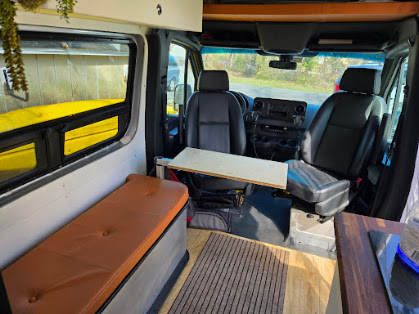
Built-in workstation with a widescreen monitor, dual swivel seats, a Lagun-style table, and dedicated phone charging mounts for both front occupants. It is a setup designed to make work, meals, and everyday use feel natural instead of improvised.
Kitchen & galley
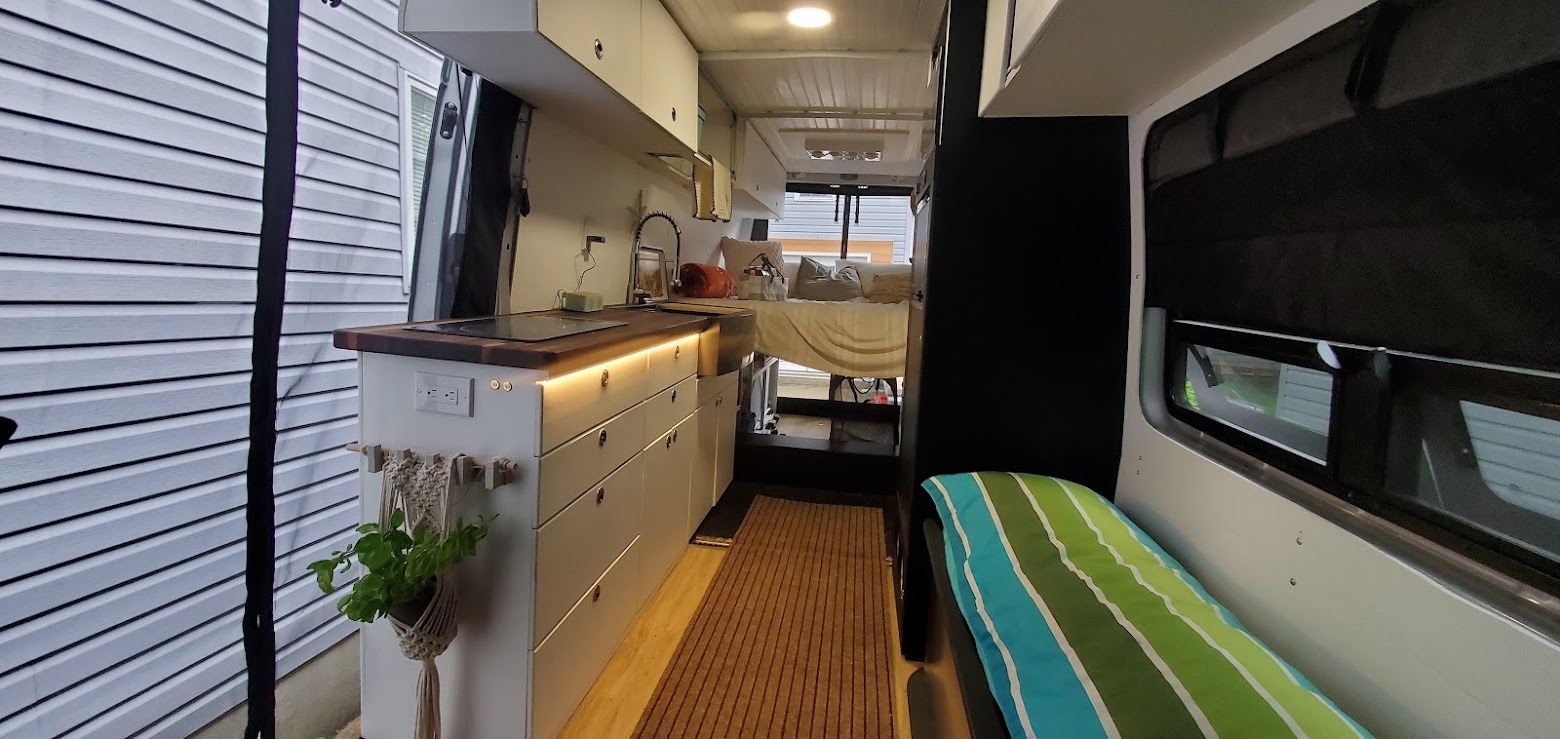
The galley pairs a 2-burner induction cooktop with a large workstation sink, walnut butcher block counters, and a convection microwave / air fryer / oven. Together, they support real cooking flexibility well beyond the minimal setups found in many van builds.
Cold storage & appliance stack
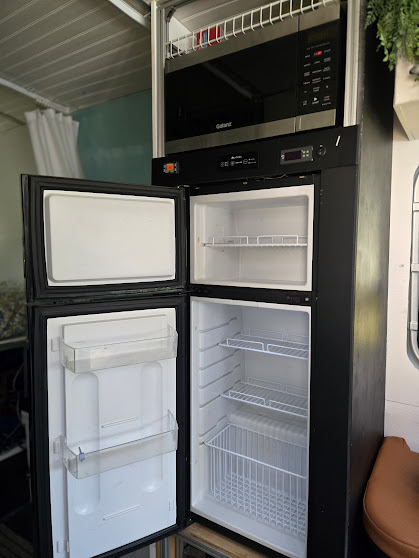
The Arana BFC 96 refrigerator/freezer provides unusually generous cold storage for a van, paired with an integrated appliance tower that makes the kitchen feel more usable and residential in day-to-day living.
Mid-Ship Bathroom & Recirculating Shower
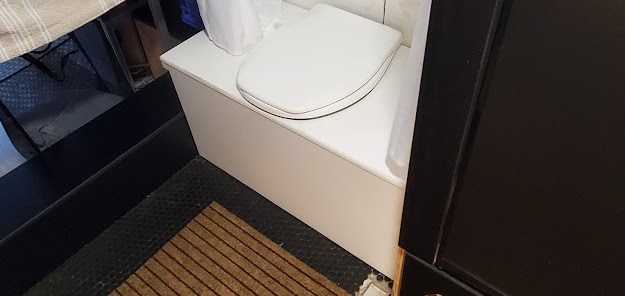
Mid-ship cross-width bath layout
The mid-ship cross-width bathroom is one of the most unusual and practical parts of the build. It creates a multi-purpose space shared between the kitchen, bathroom, and workstation, using shower curtains on two sides to form a virtual room when needed.
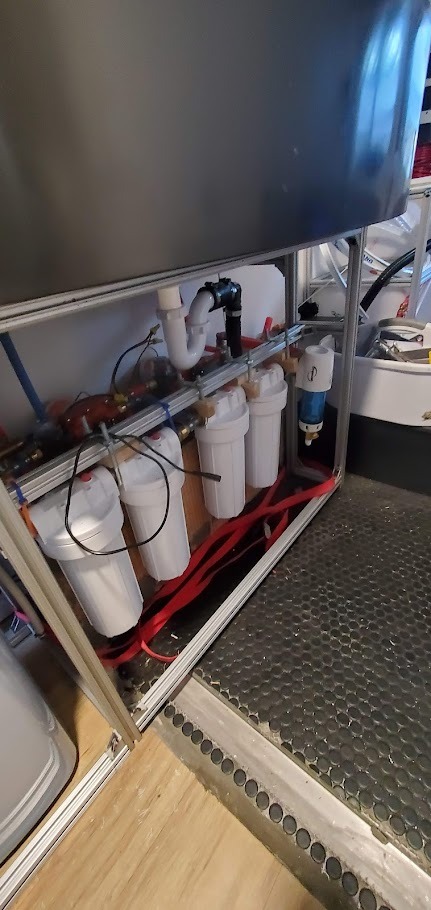
Recirculating shower system
The recirculating shower system uses multi-stage filtration and UV purification to make the shower loop practical, clean, and unusually sophisticated for a van build. The rotating shower head swings out for use and stows back into the cabinet when not needed.
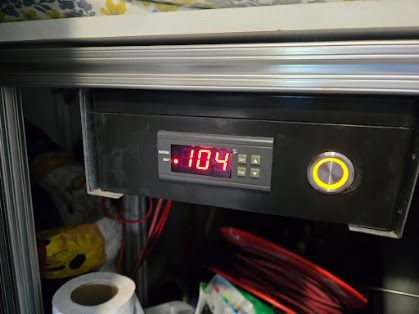
Shower control
A single power button on the custom control box activates the shower system components, while the digital interface allows precise temperature control from the diesel hydronic heater in an insta-hot fashion. Because the system does not rely on a small hot water tank, shower duration is not limited by stored hot water.
Electrical, climate & connectivity
Battery architecture
- The van uses a custom-built 24V LiFePO4 battery system rather than sealed drop-in batteries.
- The pack is built from serviceable modules with replaceable cells and dedicated JK BMS units.
- A DC-DC converter provides 12V power for most van electronics, while key loads like the air conditioner and refrigerator run natively on 24V.
- Bluetooth monitoring, individual cell visibility, and low-temperature cutoff add transparency and protection.
Charging & power delivery
- Primary charging comes from solar and alternator input, with shore power also available when convenient.
- Because the air conditioner and refrigerator run directly on 24V, they do not consume inverter capacity during normal use.
- That leaves the full 3000W inverter available for higher-draw appliances like the microwave, induction cooktop, and coffee maker, even while the air conditioner and refrigerator are operating.
- It also means the inverter can be turned off while the air conditioner and refrigerator continue operating, avoiding inverter standby losses when AC power is not needed.
Climate
- 24V air conditioning, diesel heat, and a MaxxAir fan give the van real climate flexibility across a wide range of conditions.
- The goal was not just survival, but comfort during longer stays.
Connectivity & remote work
- A custom Starlink mount, WeBoost range extender, and built-in computer workstation make the van better suited for working on the road than most recreational builds.
Battery size matters
Large 15kWh LFP Battery Bank
Stored Energy Comparison
For buyers used to 12V systems, this van's total stored energy is roughly equivalent to 12 x 12V 100Ah lithium batteries. That is an energy comparison only, not a physical battery count.
The battery bank consists of two custom-built 24V modules. Each module uses 8 x 300Ah Eve prismatic cells with its own dedicated JK BMS, for a total capacity of approximately 15.36 kWh.
For buyers more familiar with 12V lithium systems, that is roughly equivalent in stored energy to twelve 12V 100Ah batteries. The comparison is about total energy capacity, not the physical battery count in the van.
If a cell ever fails, an individual defective cell can be replaced without replacing the entire bank. Individual cell voltages are reported via Bluetooth, giving transparency and serviceability that sealed drop-in batteries do not.
Exterior equipment, suspension & windows
Exterior equipment
- Custom aluminum rear cargo rack.
- Custom aluminum roof rack.
- 2 x 170W solar panels (340W total), with room for an additional panel.
- Owl ladder & tire carrier.
- 5,000 lb tow hitch.
- 52-inch LED light bar.
Suspension upgrades
- Agile Offroad RIP Kit - a roughly $7,000 suspension upgrade for the Sprinter 2500 4x4, including 5400 lb rear springs, B6 front struts, and Fox tuned rear shocks.
- Agile Offroad double shear rear brackets - roughly an $800 add-on beyond the RIP kit.
- Hub-centric spacer / stud kit.
Wheels & tires
- BFGoodrich KO2 all-terrain LT275/70R17 tires, including full-size spare.
- Aluminum alloy wheels.
Windows & privacy
- CR Laurence driver-side and passenger-side T-vent windows.
- VanEssential complete window cover kit.
- BugWall bug screen protection for sliding and rear doors.
- UV-resistant tint applied to all windows.
- Rear door windows.
Build transparency
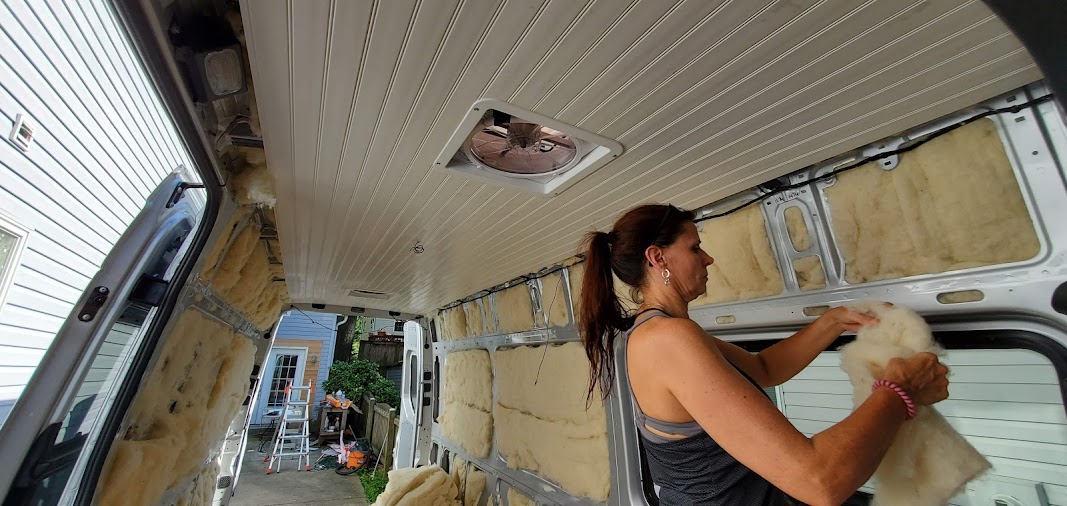
If build quality matters to you, these photos help answer the questions most listings leave open. They show what was behind the finished surfaces, so you can evaluate the van with more confidence.
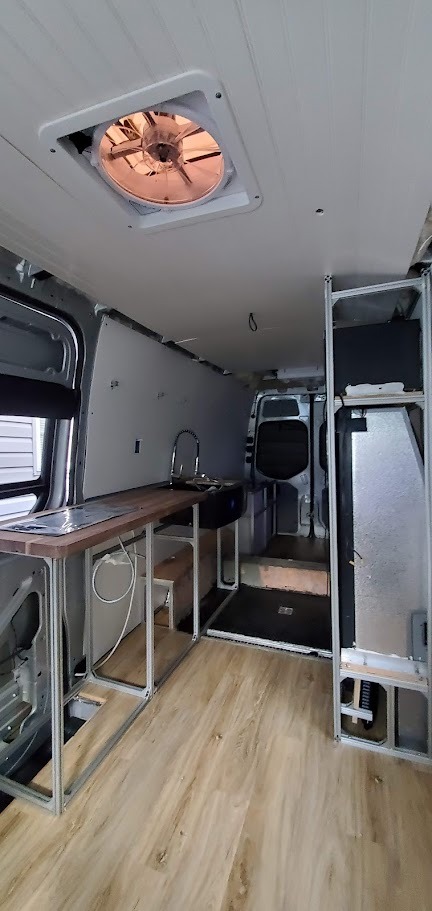
80/20 framing
80/20 is modular extruded aluminum framing, used here in place of wood for a more rigid, durable, and serviceable interior structure than many typical van conversions.
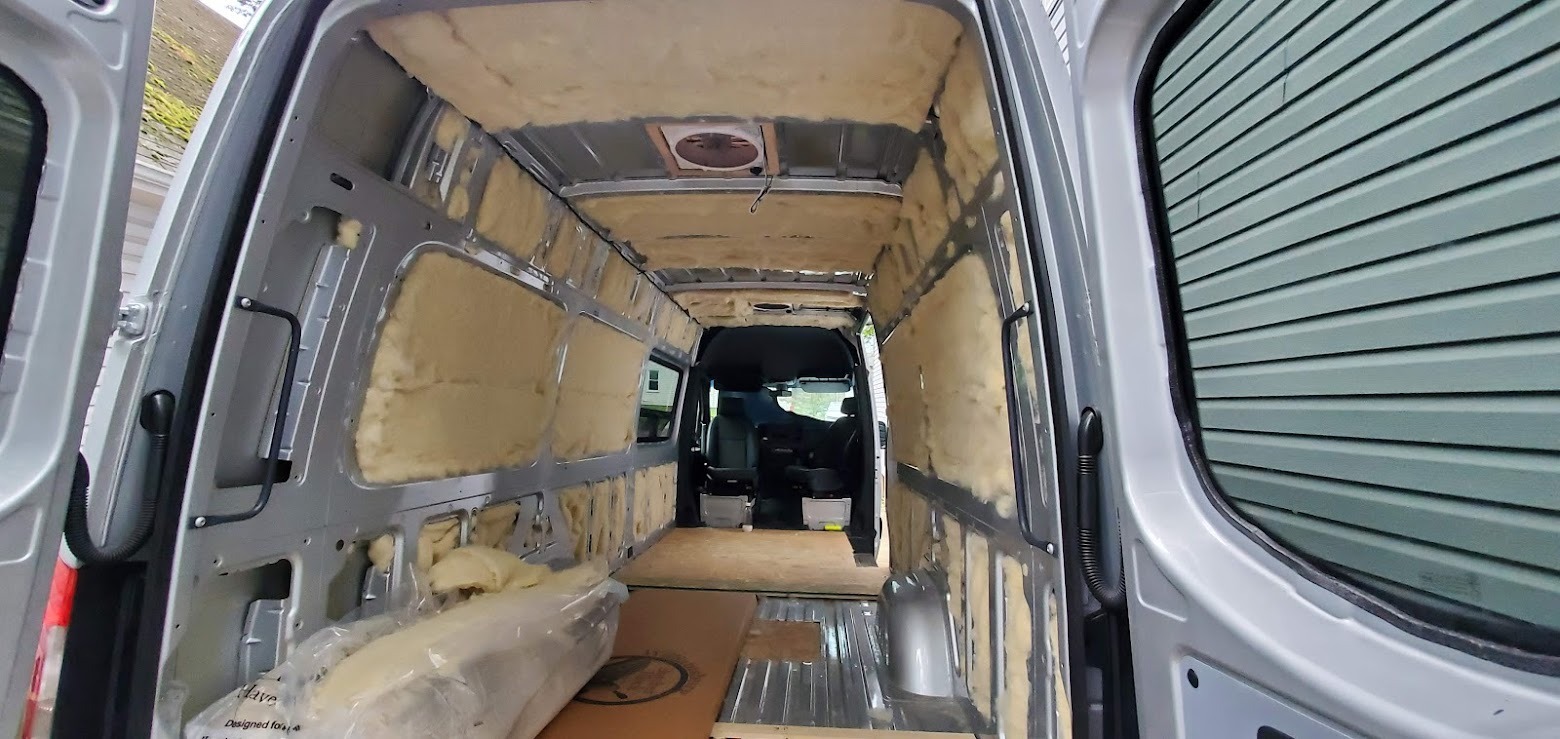
Havelock wool insulation
Havelock wool is sheep's wool from New Zealand, often used in premium van builds because it handles moisture well and supports a mold-resistant insulation strategy.
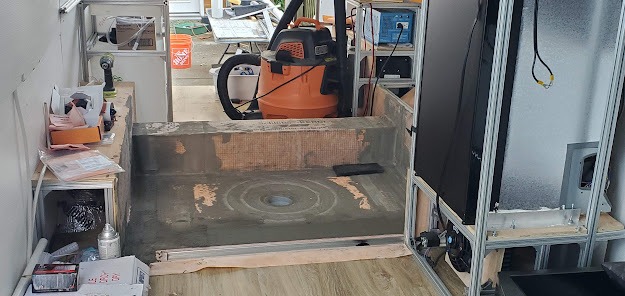
Shower system
The shower is built on a Schluter shower system and is enclosed on three sides to keep water contained. It uses a primary center drain plus a linear fallback drain in the aisle. This allows the cross-width floor to function as a real shower pan while keeping the aisle walkway unobstructed when the shower is not in use.
The build story
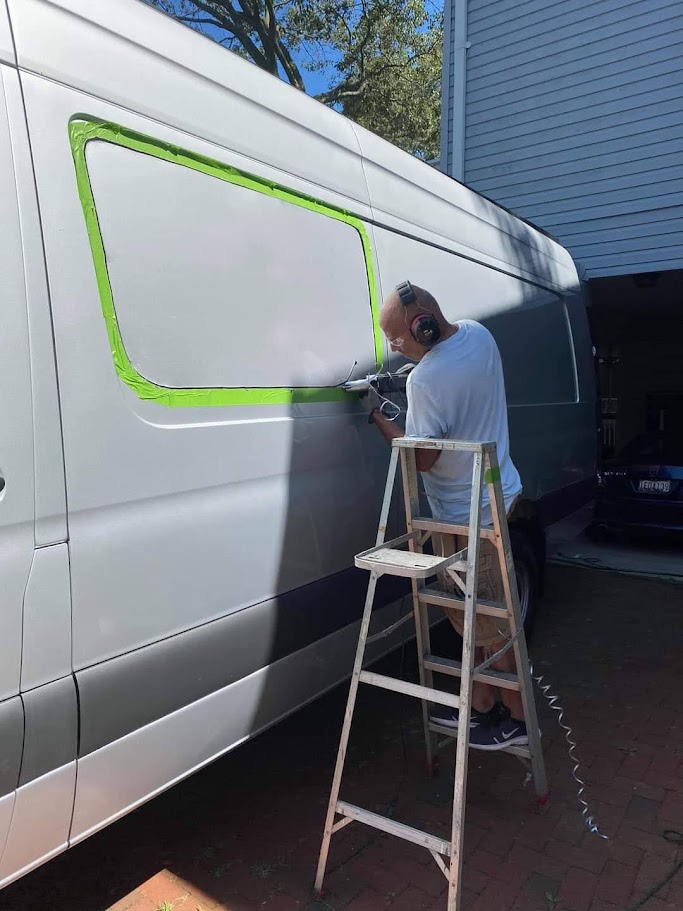
We're Peter & Jackie, a couple of nomads with a passion for engineering and design. Prior to this build, we had purchased a new Thor Class A motorhome. Within a year, it had developed roof leaks, moisture-sensitive fiberboard cabinetry had warped, wood framing had attracted carpenter ants, and cabinet doors were hanging on with a single screw. The experience made it painfully clear how cheaply many industry-built RVs are made.
We wanted a vehicle that could support working remotely while spending extended time on America's vast BLM land. When the pandemic hit, that goal turned into a two-year design-and-build project focused on creating something maneuverable enough to travel confidently, yet spacious and durable enough to live and work in comfortably.
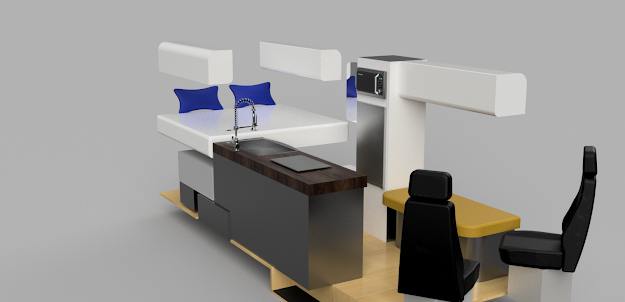
Approaching the build with an engineering mindset, we laid the design out in CAD first, after watching hundreds of van-build videos and studying what worked, what failed, and what still had room for improvement. We pulled together the best ideas we found, added some solutions we had not seen executed elsewhere, and integrated them into a single design intended to feel cohesive rather than improvised. CAD files from that design process are available to the buyer upon purchase.
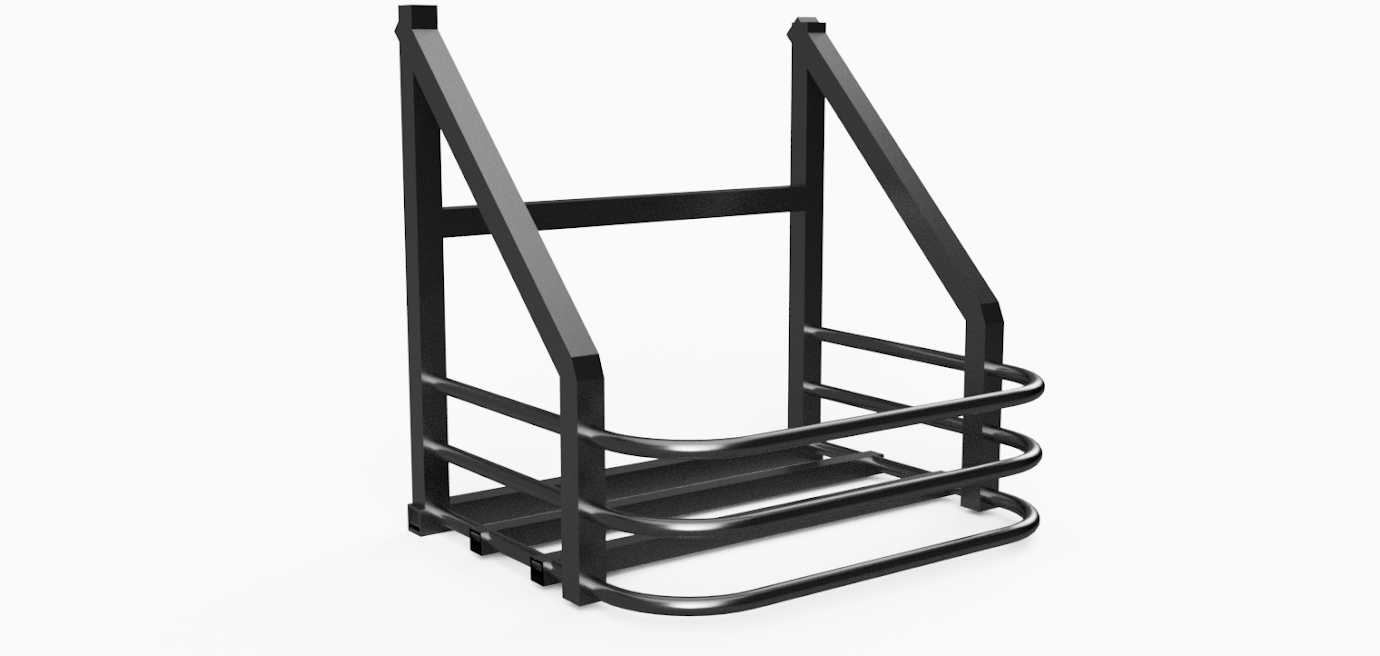
The result was meant to be a true adventure van for both work and recreation: interior protected space for two e-bikes, room for a tandem kayak, a layout that allows two people to work on computers without constantly interfering with each other, and materials chosen specifically so we could stop chasing repairs and start trusting the platform. This was never intended as a flip or speculative build. It was a passion project we built together. But now we are moving to Europe, and it is impractical to take the van with us.
Included gear & optional add-ons
A few useful items are included with the van, and several travel-oriented extras are also available separately if the buyer wants a more turnkey setup.
Included with van purchase
- Magma 7-piece induction-compatible nesting stainless cookware set (like new).
- CHULUX single-serve coffee maker.
- Electric tea kettle.
- Mud/sand recovery tracks.
Available separately
- Two RadMini foldable electric bikes - the bed platform was sized to fit them underneath - $1,200.
- Sea Eagle 473rl Pro tandem inflatable kayak package, sized to fit in the rear cargo rack - $800.
- Starlink Gen 2 dish and router - $200.
- DJI Mavic Pro drone kit with accessories and extra battery - $200.
Contact
If you are seriously interested, feel free to reach out with questions or to request additional photos, build details, or a walk-through of the systems.